BEIJING, April 10, 2026 - A delegation led by Kuomintang (KMT) Chairperson Cheng Li-wen visited Tsinghua University High School (THUHS) . The delegation was accompanied by Wu Xi, Deputy Director of the Taiwan Affairs Office of the State Council; Ma Jun, a member of the Standing Committee of the Beijing Municipal Committee of the Communist Party of China (CPC); and Qiu Yong, Secretary of the CPC Tsinghua University Committee. The event was also attended by Fang Yan, Principal of THUHS, and Cao Haixiang, the school’s Party Secretary.
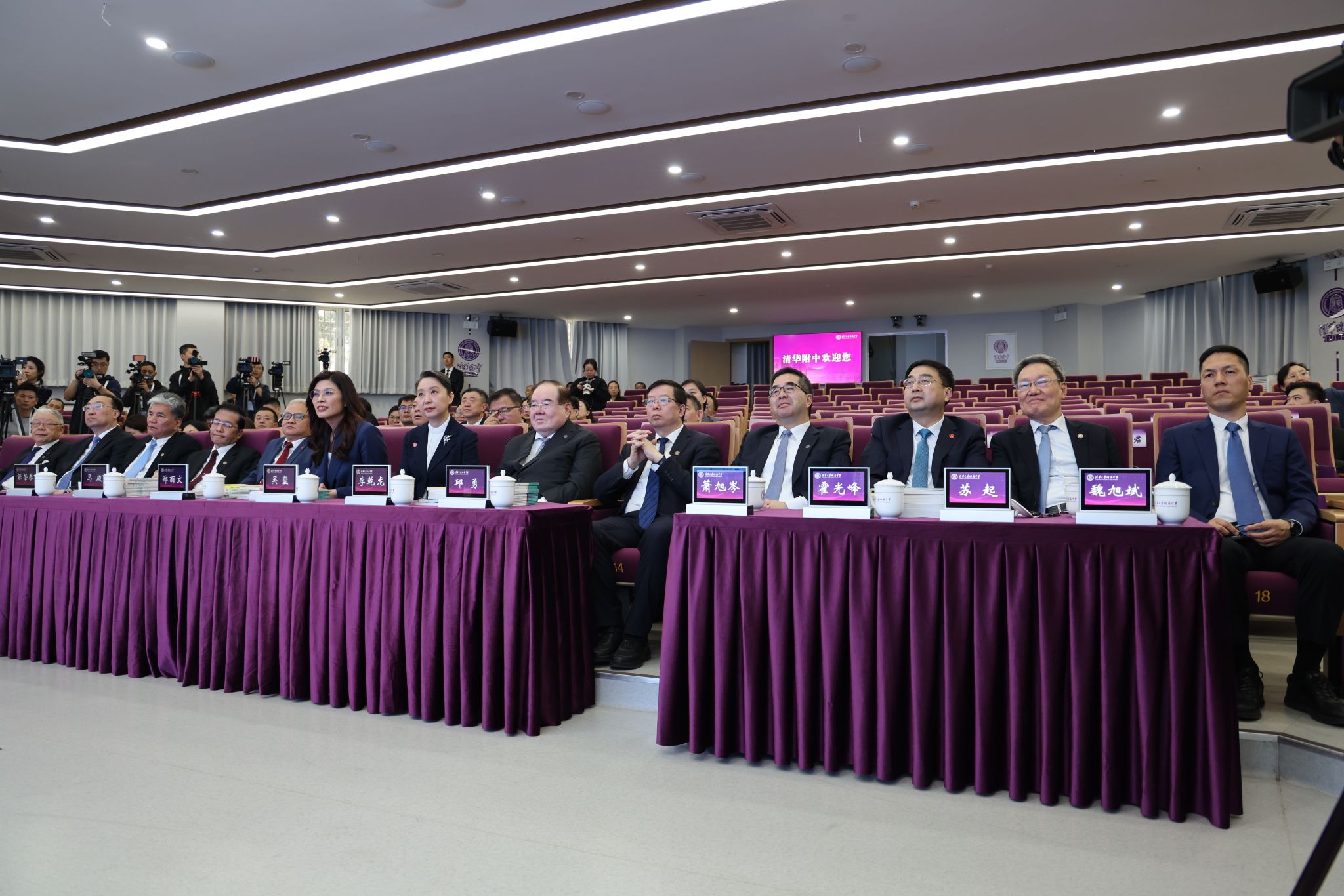
The delegation listens to an introduction of the school’s academic and innovation achievements.
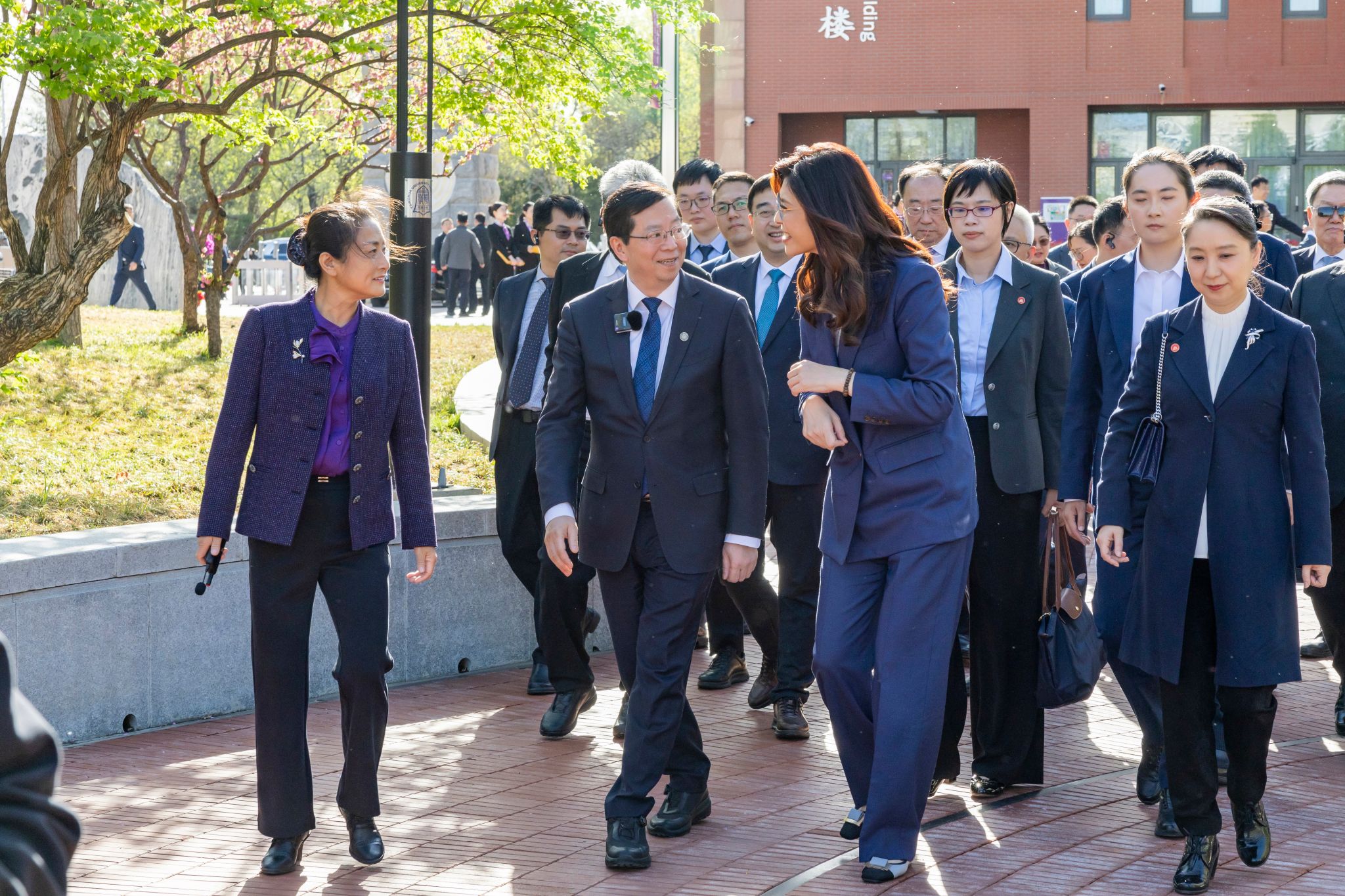
Qiu Yong (second from the left, front row) and Principal Fang Yan (first from the left, front row) welcome Cheng Li-wen (second from the right, front row) and her delegation.
Principal Fang Yan briefed the delegation on the school’s science, technology, and innovation education programs. She noted that this year marks the 111th anniversary of THUHS. Since its founding, the school has consistently prioritized cultivating a sense of national responsibility among its students. Against the backdrop of current efforts to holistically advance education, science and technology, and talent development, THUHS is actively exploring new models for innovation education. These include the establishment of ten advanced research laboratories, the development of an AI-powered cloud campus, the design of a makerspace at the secondary school level, and advanced research courses for high school students. These initiatives collectively form a multidimensional platform for nurturing innovative talent in the age of artificial intelligence. Looking ahead, Principal Fang said, THUHS will continue to deepen interdisciplinary engagement, strengthen industry-university-research collaboration, and expand international exchanges. The goal is to develop replicable and scalable best practices in "AI + Education" and to contribute to the cultivation of top-tier innovative talents who possess a strong sense of national responsibility, robust health, intellectual depth, and a global perspective. She expressed hope that this exchange would serve as a bridge for young students from both sides of the strait to collaborate in fields such as AI and technological innovation, foster mutual understanding and affinity, and jointly strive for the great rejuvenation of the Chinese nation.
The Director of the THUHS Resource Support Center introduced the core functions and applications of the AI Cloud Campus. An original development of THUHS, the AI Cloud Campus is a multifunctional platform designed for all teachers and students to "learn AI, use AI, create with AI, and ensure AI safety." Through teacher-student co-creation and sharing, the platform supports generative lesson planning, interactive learning, heuristic exercises, and personalized assessment. It has also established comprehensive repositories for teaching materials, lecture videos, exercise and exam banks, and AI agents, thereby empowering the entire educational process—from teaching and learning to research, evaluation, and administration.
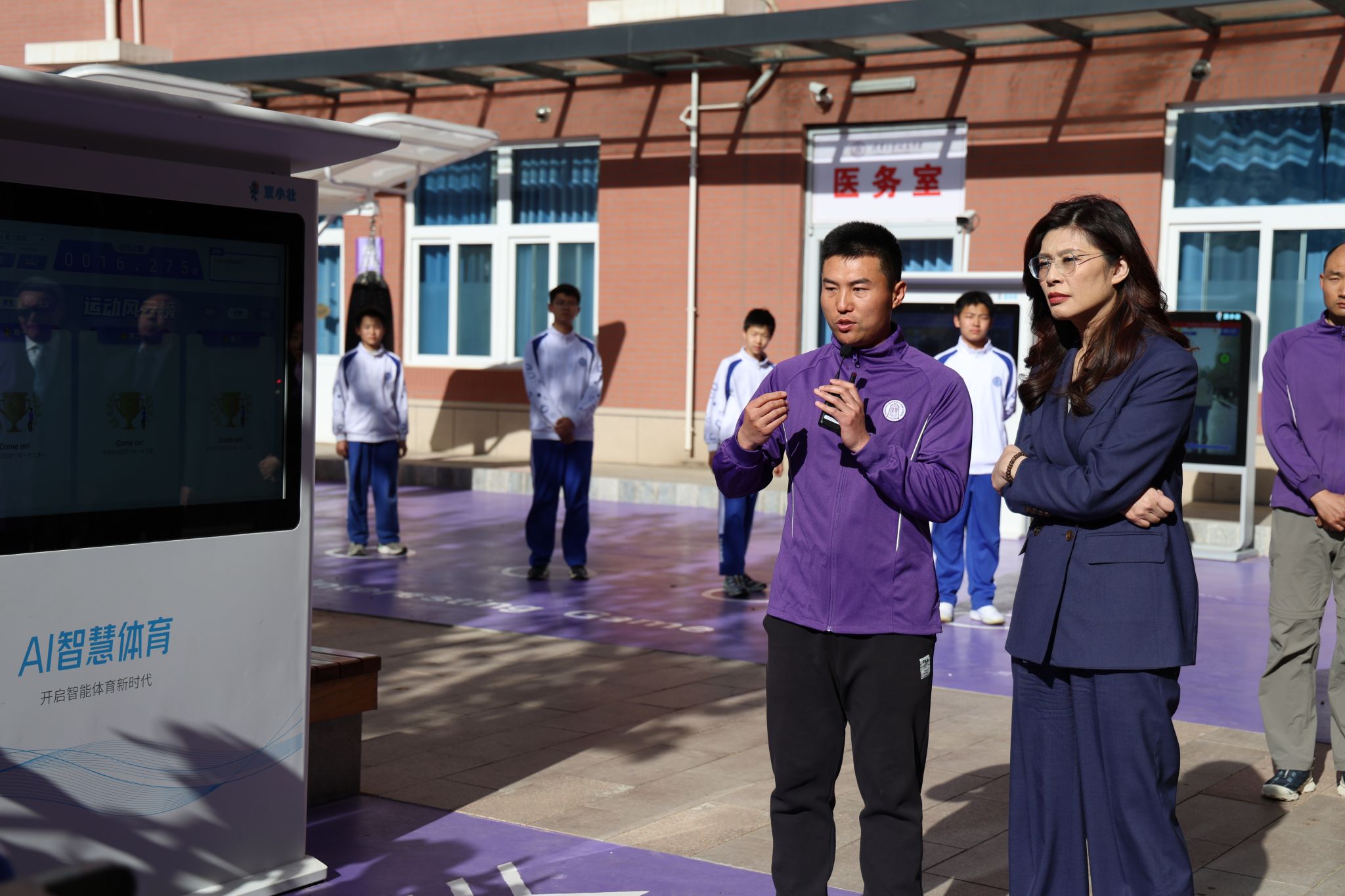
Visiting the Smart Sports Corridor.
At the Smart Sports Corridor, the delegation observed physical education teachers demonstrating the "Personal AI Coach" system for students. The system provides real-time corrective feedback and personalized diagnostic data to students performing activities such as standing long jumps, jump rope, and sit-ups. Based on their performance data, students can also choose smart exercise bikes, rowing machines, and other interactive equipment for independent training. Teachers can use the system to compare student fitness test results and adjust class designs precisely, helping each student achieve the goal of "my body, my choice."
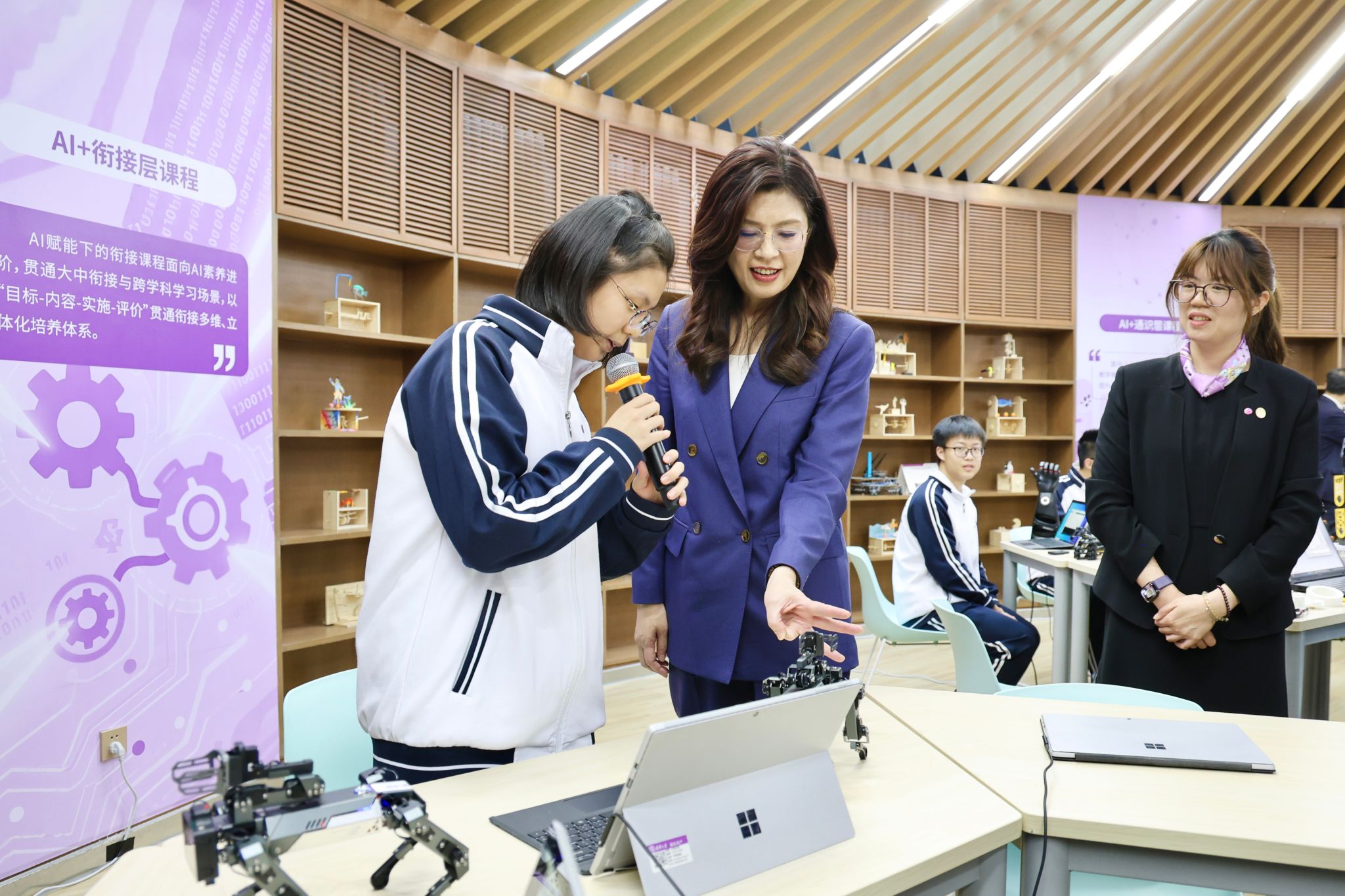
Visiting the Engineering Education Laboratory.
In the Engineering Education Laboratory, the delegation was introduced to THUHS’s "AI-empowered, three-level, four-category" engineering education curriculum system. They also viewed student-developed projects and patents from courses such as "Robotic Arm," "Robotic Dog," and "AI Project-Based Practice." THUHS is committed to cultivating students' ability to identify and solve real-world engineering problems in authentic contexts and to developing replicable pathways for integrated talent development.
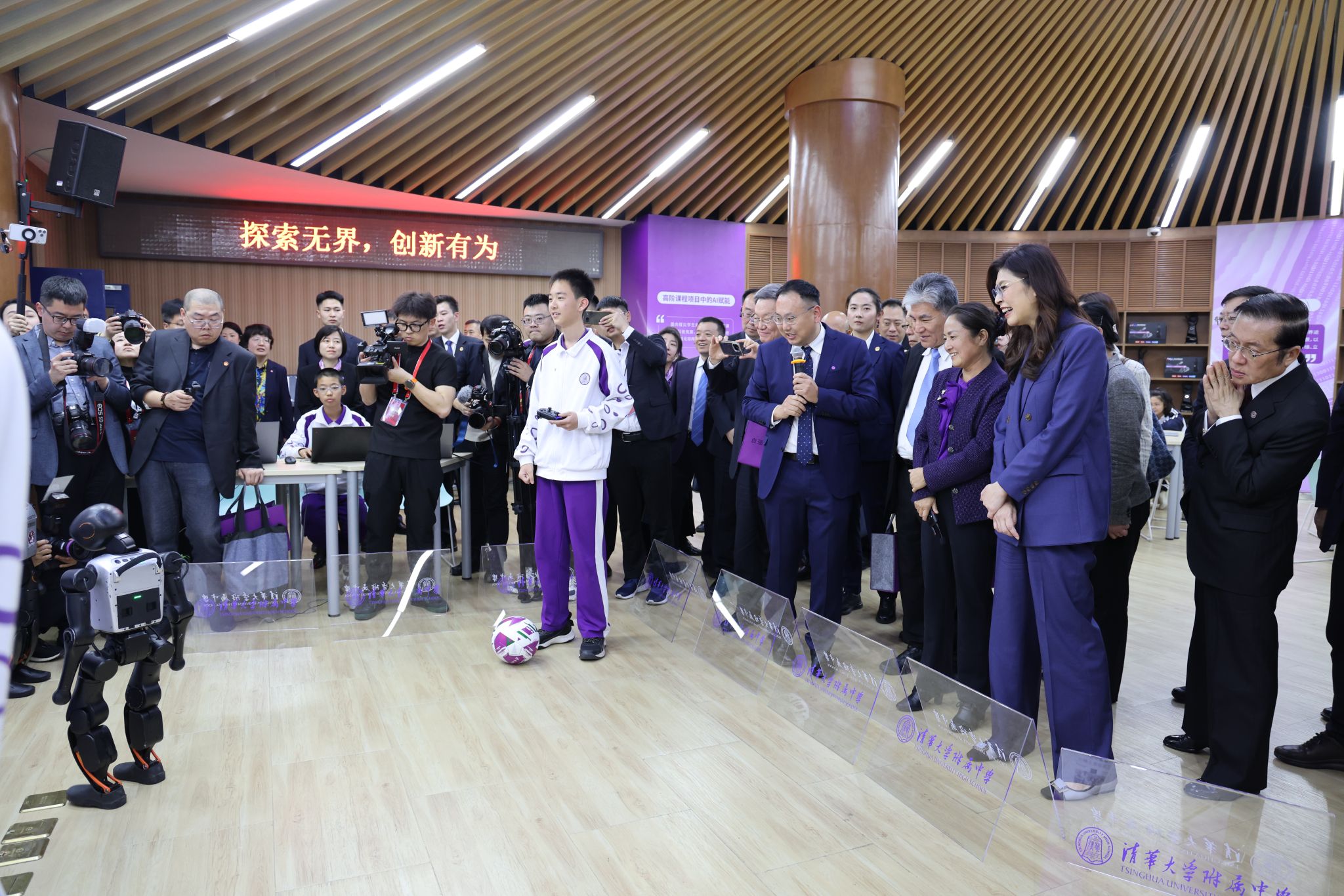
Visiting the Embodied Intelligence Laboratory.
In the Embodied Intelligence Laboratory, the delegation watched a humanoid robot soccer training session programmed entirely by students. To foster interdisciplinary practical skills, the laboratory offers a progressive curriculum—from foundational software and hardware development to advanced research projects—providing multi-level hands-on activities for students with different backgrounds. This approach enables "step-by-step advancement and research-driven application."
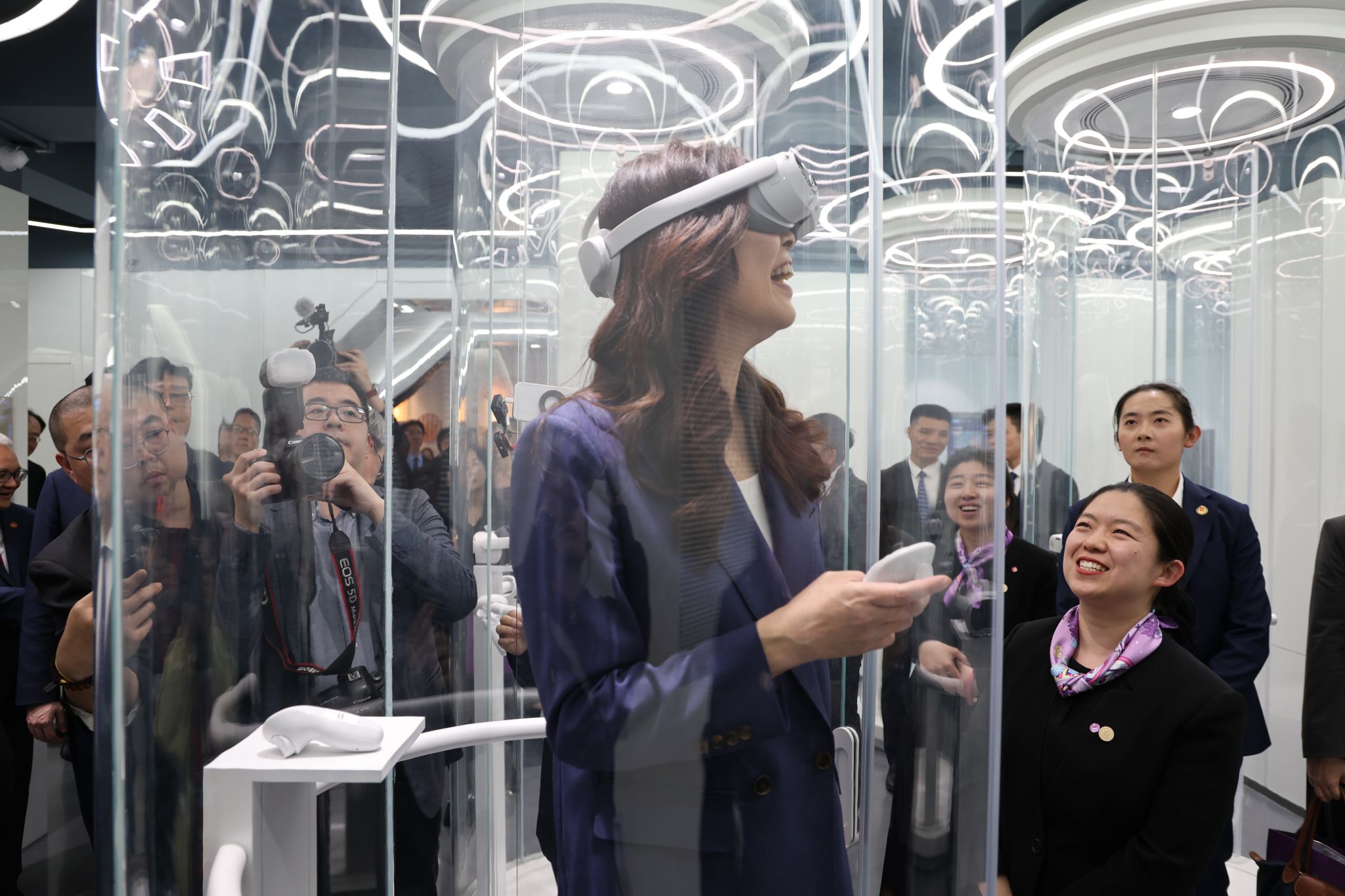
Experiencing the AI Future Classroom.
The AI Future Classroom is a high-tech educational space at THUHS that integrates AI, virtual reality (VR), and 3D technologies, serving as a practice space for the school’s "AI + Education" initiatives. During their visit, the delegation experienced scenarios such as the AI + 3D holographic display platform and the VR/AR immersive learning space, gaining a firsthand understanding of THUHS’s human-computer co-creation philosophy, which is "student-centered, teacher-led, and AI-assisted."
Other officials in attendance included Huo Guangfeng, Director of the Beijing Municipal Office of Taiwan Affairs; Zhang Ge, Secretary of the Haidian District Committee of the CPC; and Wei Xubin, Deputy Director of the Beijing Municipal Education Commission.
Source: Administrative Management Center
Reviewed by: Fang Yan, Zhang Jie, Yang Rui, Cen Yifei
Proofreaders: Zhao Ran, Deborah Kapraun
Edited by: Administrative Management Center